

Before the plan comes the conversation
One of the questions we hear most from business owners is simple: how do you actually build a marketing plan? Before anyone signs anything, they want to know what the process looks like and whether it will make sense for their business.
The honest answer is that every plan starts with a conversation. This week I sat down with a health service professional starting their own practice, whose brand and website our team had just designed and launched. We talked for about an hour, and by the end we had a clear starting budget, a realistic set of goals, and a short list of next steps for both of us.
Here is what that conversation looked like, and why we run our discovery calls the way we do.

We start by listening
The first few minutes of a discovery call have nothing to do with ads. We want to understand the person and the business: where they are in their career, who they hope to serve, and what is weighing on them right now.
In this case, the owner was weighing whether to register in a second province to serve clients there. After talking it through, they decided to hold off and build locally first. That one decision shaped everything that followed, from where we would target ads to how we would set up their search presence.
We also asked about the work they care most about. They named two specialized areas of practice that few providers focus on. Specialties like these are a gift in marketing, because focused content attracts the right people and the referral partners who send them.

What we cover on every call
Once we know the business, we walk through the building blocks of the plan. These are the same for almost every client, but how much weight each one gets depends on the person in front of us.
Measurement comes first. I am a scientist by training, so I want every piece of marketing tied to data. We connect Google Analytics, track bookings back to the website, and add a short inquiry form to key pages so a visitor can reach out in one step. That closes the loop: we can see which visits become real inquiries, and the ad platforms learn from those results to find more people like them.
Search visibility is the long game. Google Search Console shows what people type before they land on your site. Helpful blog posts that answer real questions build visibility in search and in AI tools like ChatGPT over time. We also set up a Google Business Profile. For a virtual practice that does not want a home address listed, a service area puts them on the map without exposing where they live.
Ads fill the funnel. We explained the funnel in plain terms. Social media on Facebook and Instagram builds awareness, retargeting reminds people who showed interest, and Google Ads catches people who are actively searching. Every layer can be targeted to specific communities.
Brand carries trust. Cold audiences decide in seconds whether a provider feels safe and approachable. Our team designed their brand and website to feel soft, calm, and welcoming, so every graphic and video we make carries the same colours, logo, and tone. Health ads are closely reviewed, so we target adults only, write to platform policies, and serve some sensitive topics through blog content rather than ads.
Offline still counts. When asked about brochures and business cards, our answer was yes, with a twist. They work best in the hands of trusted referral partners, like family doctors, rather than on a community bulletin board.
Talking honestly about budget
Money is where many marketing conversations get vague. We try to do the opposite and talk about it openly from the first call.
The owner came in with a rough figure in mind for the first year, which gave us a useful anchor. Rather than spread that thinly across every channel at once, we matched the scope of work to the budget: start with what will produce results fastest, then add more as the results justify it.
That looks different for every business. A solo practice just starting out and a large multi-provider clinic need very different plans, so we size the scope to the business in front of us.
We also pace spending around seasonal trends instead of spending the same amount every month. Every business has busier and quieter stretches, and the plan follows them.
In slower periods, like the summer months for many health services, we scale back. During high-cost stretches like Black Friday and Cyber Monday, when competition drives up click prices, we pull back and save that budget for when it goes further.

The math that matters
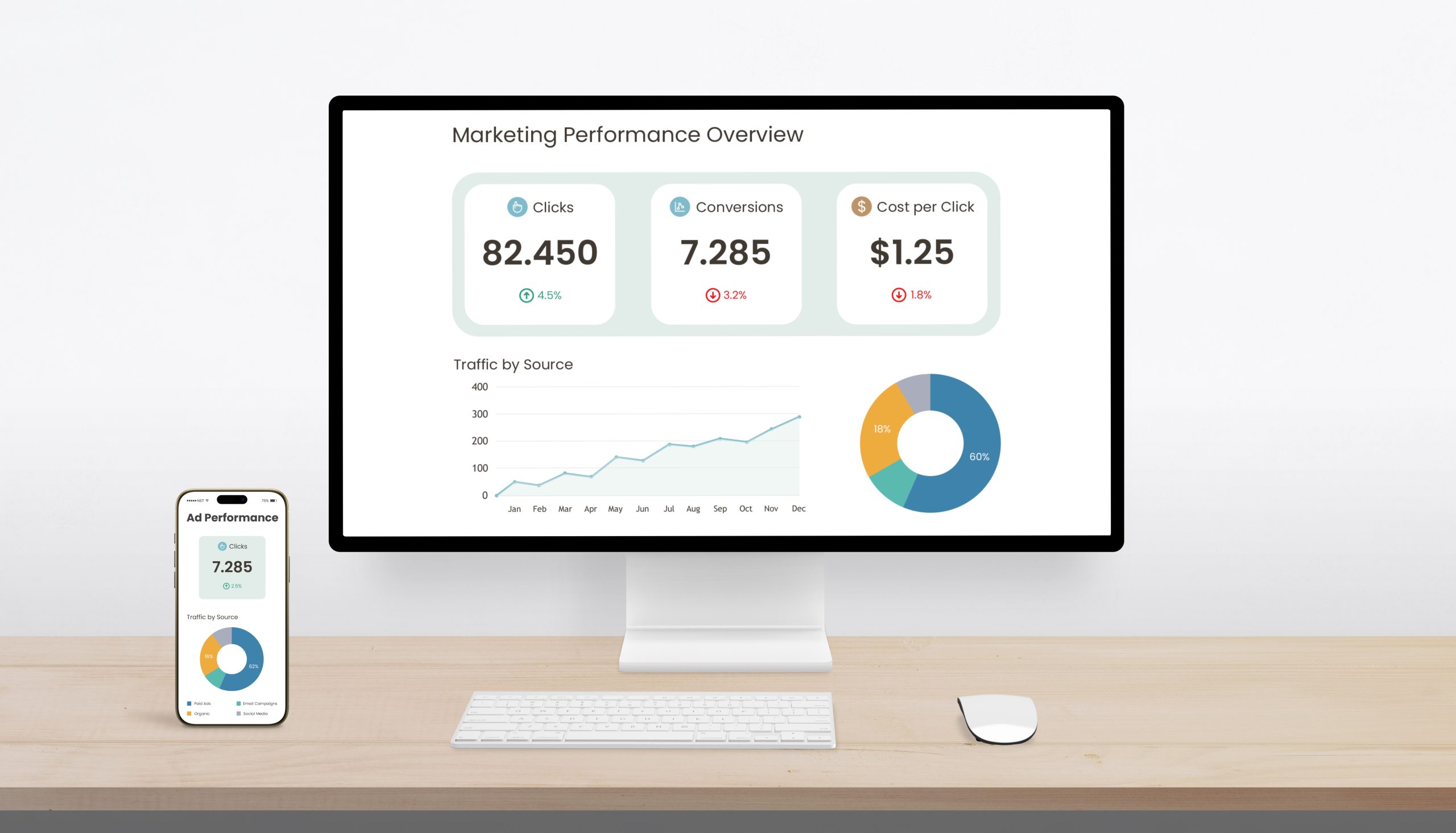
Click costs have risen a lot in recent years, which is why we focus on two numbers: what it costs to win a client, and what that client is worth over time.
We set a target cost per inquiry together, based on what a new client is worth to the business. The payoff comes from lifetime value: a client who attends regularly and stays two to four years is worth many times what it cost to reach them. A couple of long-term clients can cover an entire first year of marketing.
We are just as upfront about what a starter budget can and cannot do. A modest search budget is a workable starting point, not an ideal one. Early on, cost per inquiry will likely run above target until the campaigns gather enough data, and more spend shortens that learning period.
This is also why we care more about lead quality than lead count. Each month we review contact form submissions and refine the messaging. Sometimes that means going from 20 inquiries to 10, but with far more of them turning into long-term clients.
From conversation to plan
A discovery call should end with clear next steps for both sides. Ours did:
- We send the Google Business Profile setup link, and the owner sets up their service areas.
- The owner jots down the questions and struggles their clients bring to appointments. Those become blog topics.
- Within a few days, we send a written plan with platform options and budgets anchored to the budget they had in mind.
- We book a follow-up call with Katie, the campaign manager who will run their ads day to day and who has years of experience in the health services space.
One question came up that we hear often: do I have to write the blog posts myself? No. It is a partnership. A client might send Katie a handful of bullet points on a topic, Katie drafts the post, and the client edits it until it sounds like them. They bring the professional expertise, we bring the marketing know-how.
The first-year plan includes four posts, one each quarter. Each is built around a real question, with question-based headings, direct answers and a short FAQ, which helps both Google and AI assistants surface it. Every post also gets schema markup, links to service pages, a matching Google Business Profile post, and a review against professional advertising standards.
Unlike ads, the visibility a good post builds keeps working after the budget stops. Niche topics are especially valuable, since few competitors write about them and they help referral sources find the practice on their own.
After launch, the plan keeps evolving. Every month we check in on clicks, inquiries, cost per inquiry and, most importantly, which inquiries were a good fit. Then we adjust targeting, wording and creative. At year end, a review turns twelve months of real data into the plan for Year 2.
A long-game plan without a long-game budget
When I sat down to build the actual plan and budget, I organized it into three phases: starter, growth, and sustaining. New businesses rarely have a long-game budget, but they still need a long-game plan. Each phase matches the scope of work to the budget available at that stage, and results decide when to take the next step.
Month one is the foundation: setup, research and the first activities. That covers conversion tracking, the inquiry form, the Google Business Profile, keyword research for a 12-month content calendar, and the first Google Search campaign, so every result is measured from day one.
- Starter: a focused scope. Google Search ads plus SEO, nothing more. A small budget goes furthest where people are already looking for help, the most ready-to-book stage of the funnel. The job of these first months is to build tracking and prove what works.
- Growth: the full funnel. Once Google has a couple of months of conversion data, we add Meta ads on Facebook and Instagram. They reach people who are not searching yet and stay in front of visitors who were not ready to book. Each quarter, budget shifts toward whichever platform brings better inquiries.
- Sustaining: accelerated growth. When cost per inquiry and lead quality are where the owner wants them, the scope widens: more frequent blog posts, short video clips, and test campaigns built around the niches they care about most. This rhythm is what carries a business past its start-up stage.
The point is not to spend more for its own sake. Each phase earns the next one, budgets can be paused or changed with 30 days’ notice, and the owner keeps their ad accounts, content and data from day one.
Why we work this way
A marketing plan built in a vacuum rarely survives contact with a real business. By starting with your goals, your budget, and your numbers, we build something that fits where you are today and can grow with you.
If you have been wondering how a plan for your business might come together, the first step is the same one this practice took: a conversation. Book a discovery call with Flight Plan Marketing and let’s talk about where you want to go next.